Because specs answer “what is it” — not “is it for me.”
When a buyer opens your page, they aren’t auditing your formula. They’re asking one question: does this extract fit my product, my market, my needs?
If your page leads with parameters instead of application context, most buyers leave before they ever reach your specs. Not because the specs are wrong — because relevance wasn’t established first.
Information order determines whether buyers stay. Specs matter. Sequence matters more.
Part 1: Buyers don’t start with “what is it” — they start with “is it for me”
Most suppliers write pages from the inside out:
Product name → ingredients → specs → purity → test indicators → packaging
That sequence is technically correct. It’s just not how buyers think.
What buyers actually want to know first:
- What end products is this extract used in?
- Does it work for supplements, food, beverages, cosmetics, or pet nutrition?
- Does it fit my current market direction?
- Are there real application examples I can reference?
Ingredients answer: what is this. Application context answers: what does this have to do with me.
If buyers can’t answer that second question quickly, most won’t scroll down to read the first.
Part 2: Different buyers look for different things first
Extract buyers aren’t one type of person. The same page gets read by R&D formulators, procurement managers, brand owners, and first-time screeners — and they each look for something different on the first pass.
| Buyer type | First priority | What to lead with |
|---|---|---|
| R&D / formulation | Ingredients, specs, stability, test documents | Technical parameters + documentation |
| Procurement | Supply capacity, MOQ, lead time, price range | Basic specs + supply capability |
| Brand / channel | Application scenarios, market direction, selling points | Use cases + product value |
| Initial screening | Relevance, clarity, supplier credibility | Summary + scenario entry + core documents |
The question isn’t whether ingredients or applications matter more. The question is: which layer does your buyer need first?
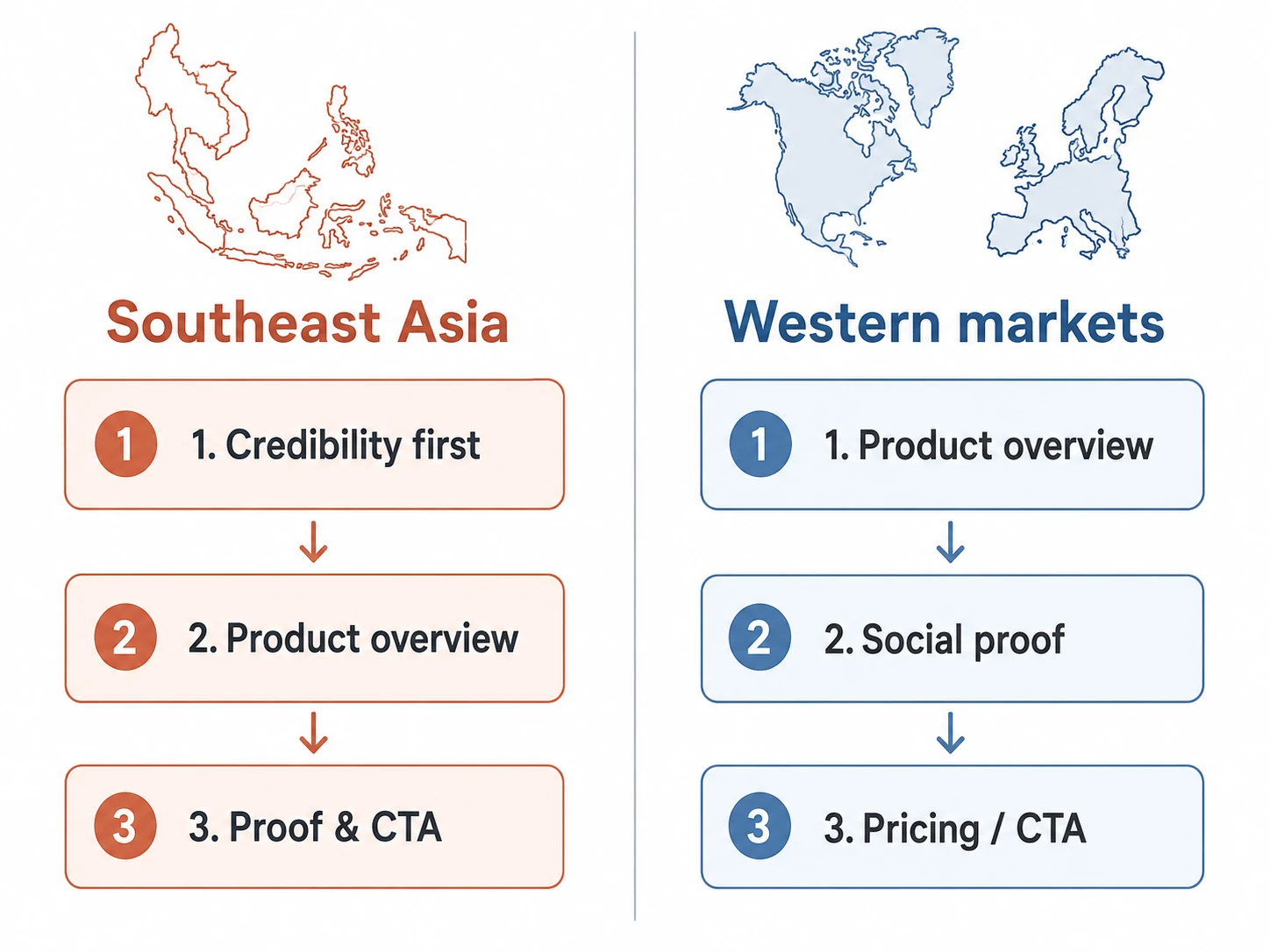
Part 3: Southeast Asian and Western buyers read pages in different orders
| Market | What they look for first | The underlying logic | Recommended page order |
|---|---|---|---|
| Southeast Asia | Application fit, usability, supply capacity, MOQ | First assess: can this match my current business quickly? | Scenarios first → ingredients → basic documents |
| Western markets | Ingredient sourcing, compliance documents, specification detail | First assess: can I trust this enough to enter review? | Ingredients + documents first → application context |
This isn’t an absolute rule, but it’s a useful framework for deciding how to organize content when you know your target market.
Part 4: Most extract pages don’t have too little information — they have information in the wrong order
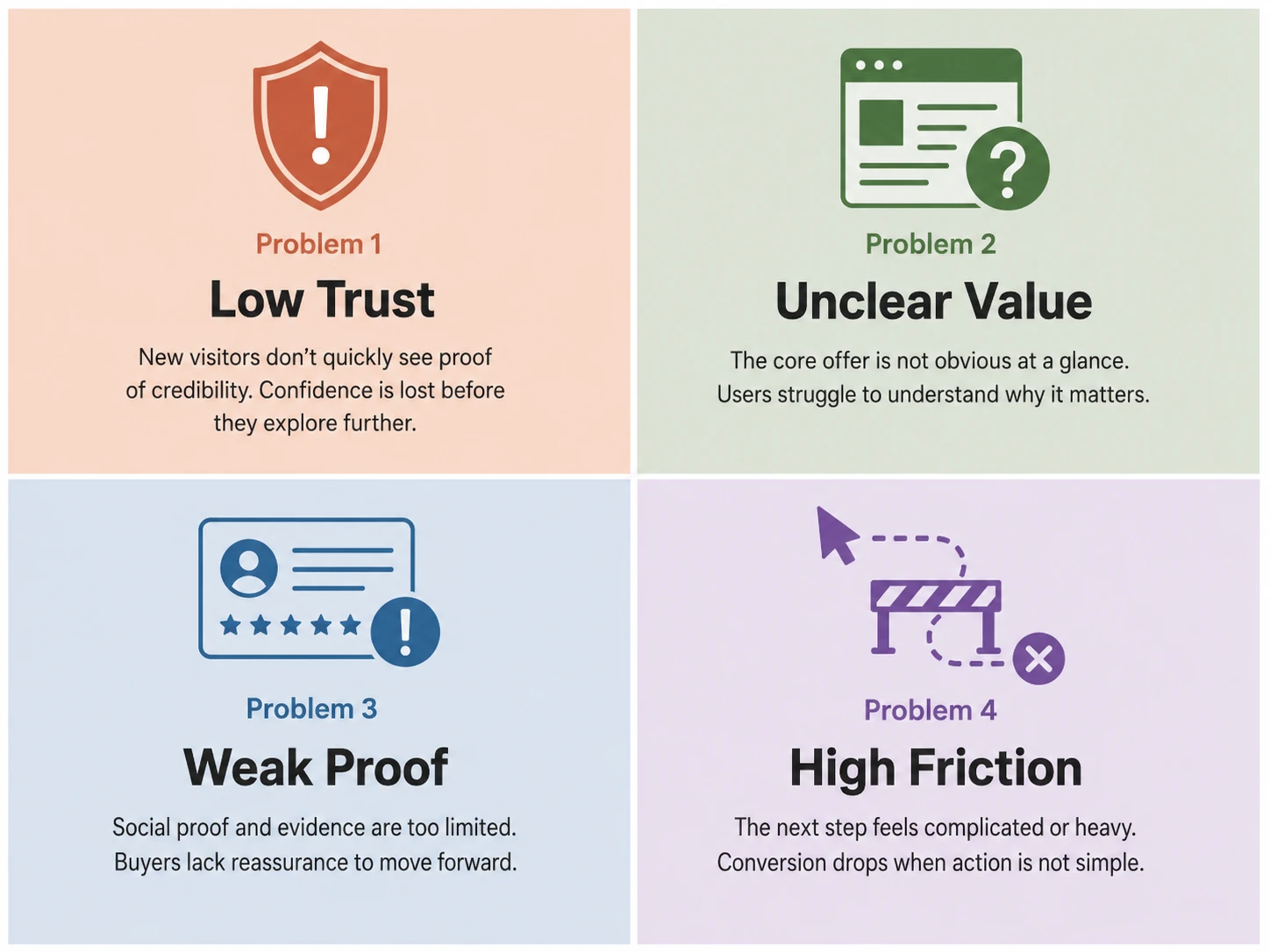
From observing extract supplier pages across the industry, four patterns show up consistently:
Problem 1 — Leading with parameters, no application context The page looks professional, but buyers can’t immediately tell whether the product fits their needs. They know the product has specifications. They don’t know if it’s relevant to them.
Problem 2 — Application descriptions that are too vague “Widely used in food, supplements, and cosmetics” sounds comprehensive. It isn’t useful. It doesn’t tell the buyer which end products, which use cases, or which specific directions the extract supports.
Problem 3 — Documents exist but aren’t visible Many suppliers can provide COA, spec sheets, and test reports — but the page doesn’t show this. Buyers have to ask repeatedly, which increases friction and reduces trust.
Problem 4 — Same page structure for every market Southeast Asian buyers want to see usability first. Western buyers want to see compliance documentation first. Using identical page structures for both means neither audience gets what they need at the right moment.
The underlying issue in all four cases isn’t missing content. It’s content organized around the supplier’s logic instead of the buyer’s decision process.
Part 5: A three-layer structure that works
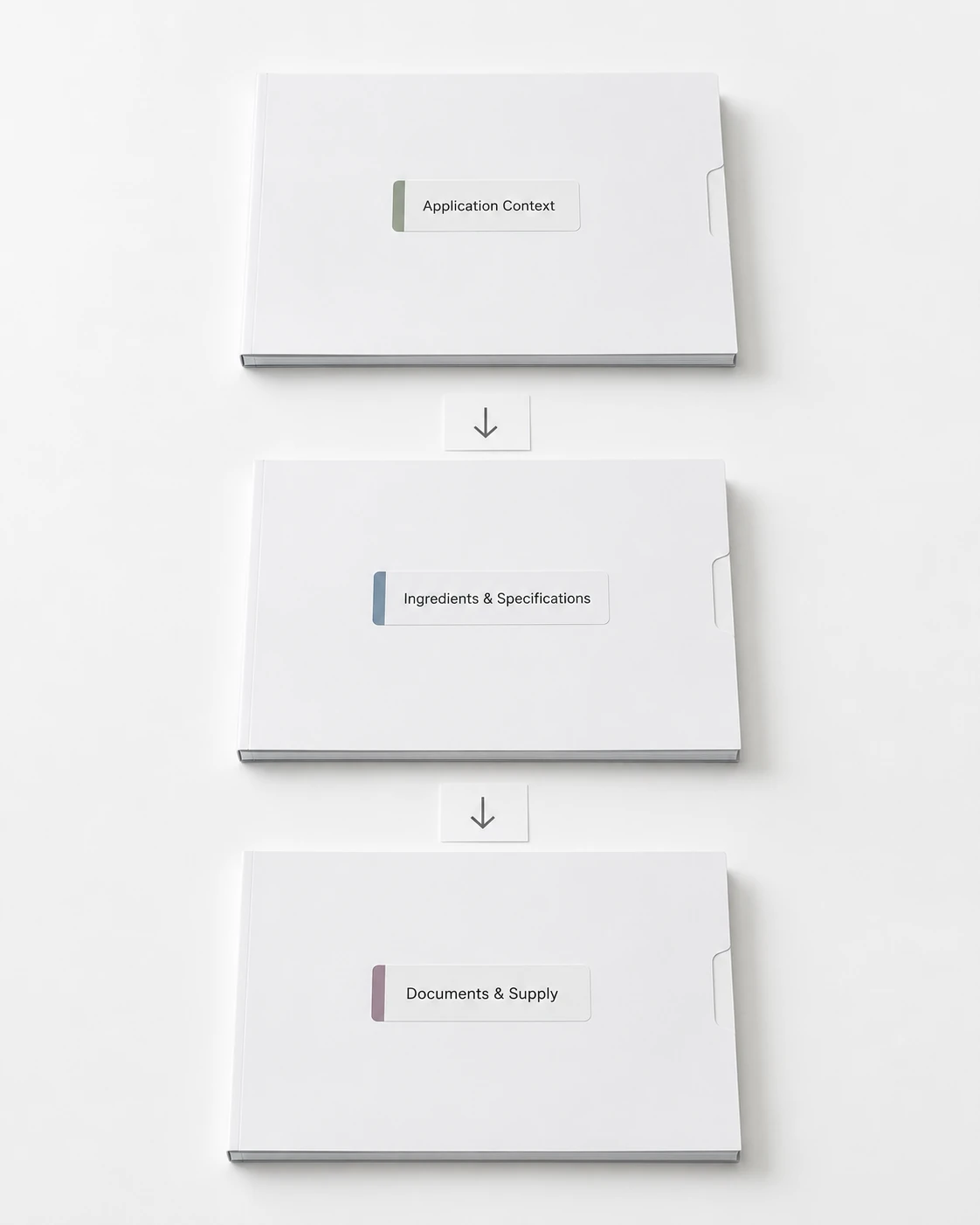
If you’re not sure where to start, one straightforward framework:
Layer 1 — Application context (what kind of buyer is this for, what products does it go into) Lead with this. Help buyers self-identify within the first few seconds.
Layer 2 — Ingredients and specifications (active compounds, purity, extraction method, stability) This is the core technical layer. Place it where buyers expect to find it — after they’ve confirmed relevance.
Layer 3 — Documents and supply capability (COA, spec sheet, test reports, MOQ, lead time, certifications) This is what closes the gap from interest to inquiry. Make it easy to find, not something buyers have to ask for.
The real optimization isn’t adding more — it’s sequencing better
Ingredients matter. Specifications matter. Documentation matters.
But buyers don’t read pages in the order suppliers write them. They read in the order that matches their own purchasing logic.
Before your next page revision, check three things:
✅ Does the opening section clearly state what this extract is used for?
✅ Are ingredients, specs, and test documents placed where buyers can actually find them?
✅ Have you adjusted the page structure for different target markets?
The information you already have may be sufficient. What’s worth changing is the order it appears in — because buyers filter by what they see first.