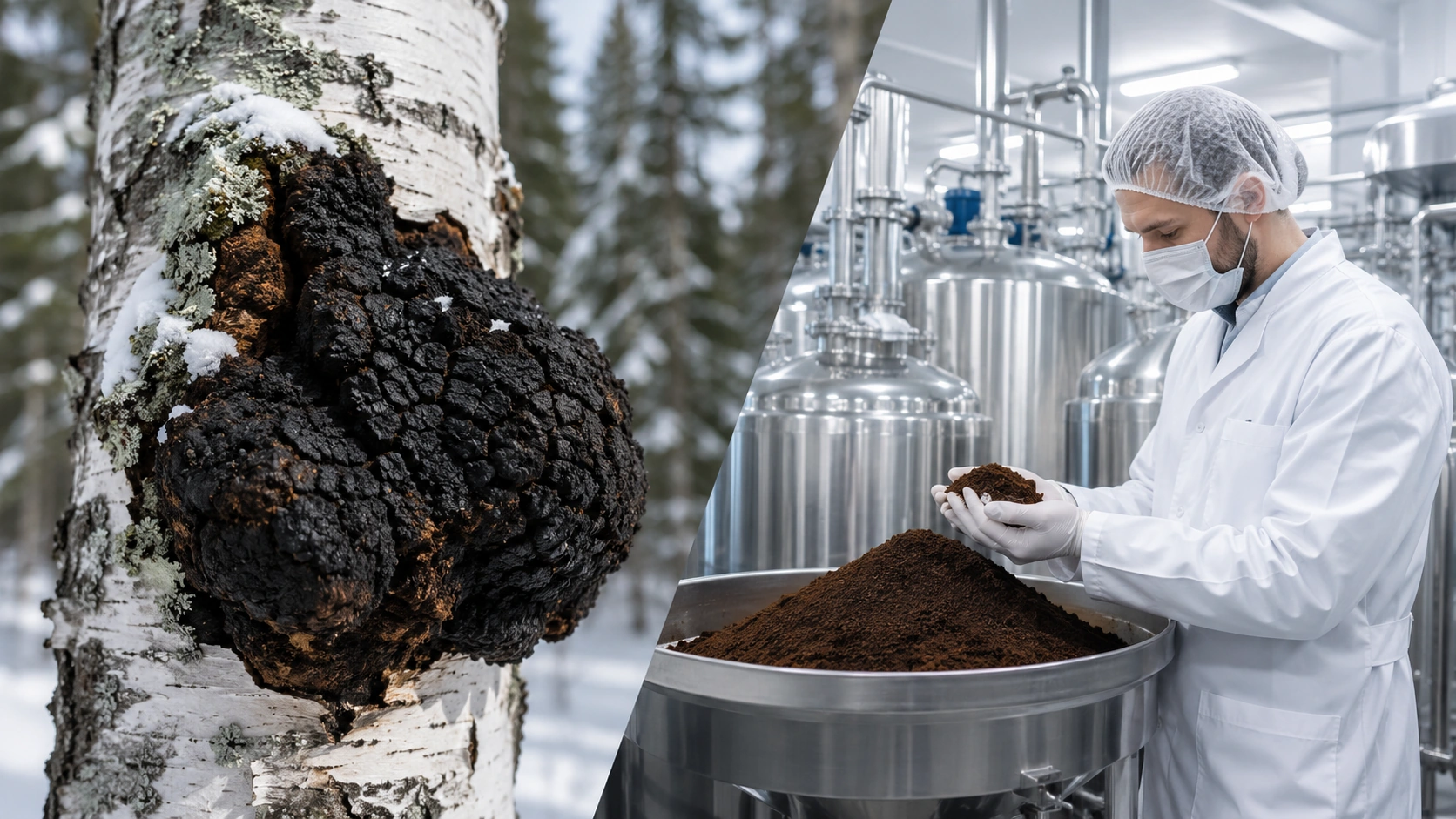
Canada is one of the most mature chaga mushroom powder markets in the world — the fungus grows wild on birch trees across Quebec, Ontario, and the boreal forest, and Canadian wellness brands have sold chaga tea and supplements domestically for over a decade. That familiarity is an advantage for buyers: unlike newer functional-mushroom categories, there is no shortage of suppliers who can show a real harvest region, a real certificate of analysis (COA), and a real organic certification. The challenge is different — with wild-harvested, cultivated, and factory-direct options all competing for the same shelf space, sourcing decisions come down to verifiable specification data (polysaccharide and betulinic acid content), heavy metal testing (chaga concentrates trace metals from its host tree), and total landed cost. This guide breaks down what to evaluate in a chaga mushroom powder supplier, how to verify claims before you commit, and reviews five real companies Canadian brands are likely to encounter.
What to Consider When Sourcing Chaga Mushroom Powder
Chaga mushroom powder refers to dried, milled Inonotus obliquus sclerotia — the hard, charcoal-like growth chaga forms on living birch trees — sold either as raw powder or as a concentrated extract powder standardized for polysaccharides and betulinic acid. Chaga sourcing has a different risk profile than cultivated mushrooms like lion’s mane or reishi, because virtually all commercial-grade chaga is wild-harvested sclerotia rather than lab-grown fruiting body. That raises specific questions buyers need to answer before placing an order.
- Raw Material and Harvest Region: Wild chaga sclerotia grows on living birch trees for 10 to 20 years before harvest, accumulating polysaccharides and betulinic acid from its host. Ask exactly where the material was harvested — Quebec, Ontario, Siberia, Northern Europe, or Changbai Mountain in China — since region affects both compound profile and traceability.
- Extraction Method: Dual extraction means a hot water plus ethanol process applied to concentrate both polysaccharides and betulinic acid, a triterpene that hot water alone extracts poorly. Raw chaga powder is not the same as chaga extract powder — a supplier should be able to state which method it uses and why.
- Active Compound Verification: Ask for specific, testable numbers — polysaccharide percentage, betulinic acid percentage, beta-glucan percentage — backed by HPLC analysis and a lot-specific COA, not marketing language like “potent” or “premium.”
- Heavy Metal and Contaminant Testing: Because chaga draws compounds from its host tree over many years, it can also accumulate trace heavy metals depending on soil and air conditions at the harvest site. Arsenic, lead, mercury, and cadmium testing per batch matters more for chaga than for most other functional mushrooms.
- Certifications: USDA Organic, EU Organic, Canada Organic Regime (COR) certifiers such as Ecocert or Pro-Cert, Health Canada compliance (NPN if selling as a licensed natural health product), GMP, and third-party lab verification (Eurofins, SGS) all demonstrate audited process rather than self-reported quality.
- Production Capacity, Location, and Landed Cost: A Canada-based or nearby US supplier offers shorter lead times and simpler customs; a factory-direct overseas manufacturer typically offers lower per-kilogram pricing by removing the importer/distributor margin. Calculate true landed cost — freight, duties, and lead time — not just the quoted price per kilogram.
How to Verify a Reliable Chaga Supplier
A shortlist is only useful once you have validated it. Take these steps before committing to a purchase order.
- Request the COA and Third-Party Verification. Compare the supplier’s stated polysaccharide and betulinic acid percentages against the batch COA, and ask whether an independent lab has verified the same figures.
- Ask for Origin and Harvest Documentation. A credible chaga supplier can specify the harvest region and, for wild material, provide an origin certificate per production batch.
- Confirm Heavy Metal Testing Methodology. Request the arsenic, lead, mercury, and cadmium test results and the standard used (USP or EU MRL), since this is the single most common quality failure point for wild-harvested chaga.
- Order and Test Physical Samples. Request a free sample and test it independently, or in your own formulation, and confirm the results match the batch COA.
- Assess Supply Chain Stability and Total Landed Cost. Ask how long the company has sourced chaga, whether raw material availability is seasonal, and calculate landed cost including freight and duties — not just unit price.
A Detailed Review of the Top 5 Chaga Mushroom Powder Suppliers Serving Canada
| Rank | Company Name | Country | Key Products |
|---|---|---|---|
| 1 | Pure Mushroom Extract (Hangzhou Molai Biotech Co., Ltd) | China | Organic Chaga & Mushroom Extract Powders, Custom Blends, OEM/Private Label |
| 2 | Stay Wyld Organics | Canada (Pemberton, BC) | Bulk Organic Chaga Powder, Capsules, Functional Mushroom Products |
| 3 | Chi Chaga (Chi Chaga Foods Inc.) | Canada (Quebec) | Wild Canadian Chaga Chunks, Powder, Tea, Capsules |
| 4 | Lemon Lily Tea Wholesale | Canada (Toronto, Ontario) | Wildcrafted Chaga Powder, Organic Teas and Superfood Powders |
| 5 | Forbes Wild Foods Inc. | Canada (Toronto, Ontario) | Wild-Harvested Chaga Chunks and Powder, Bulk Wild Foods |
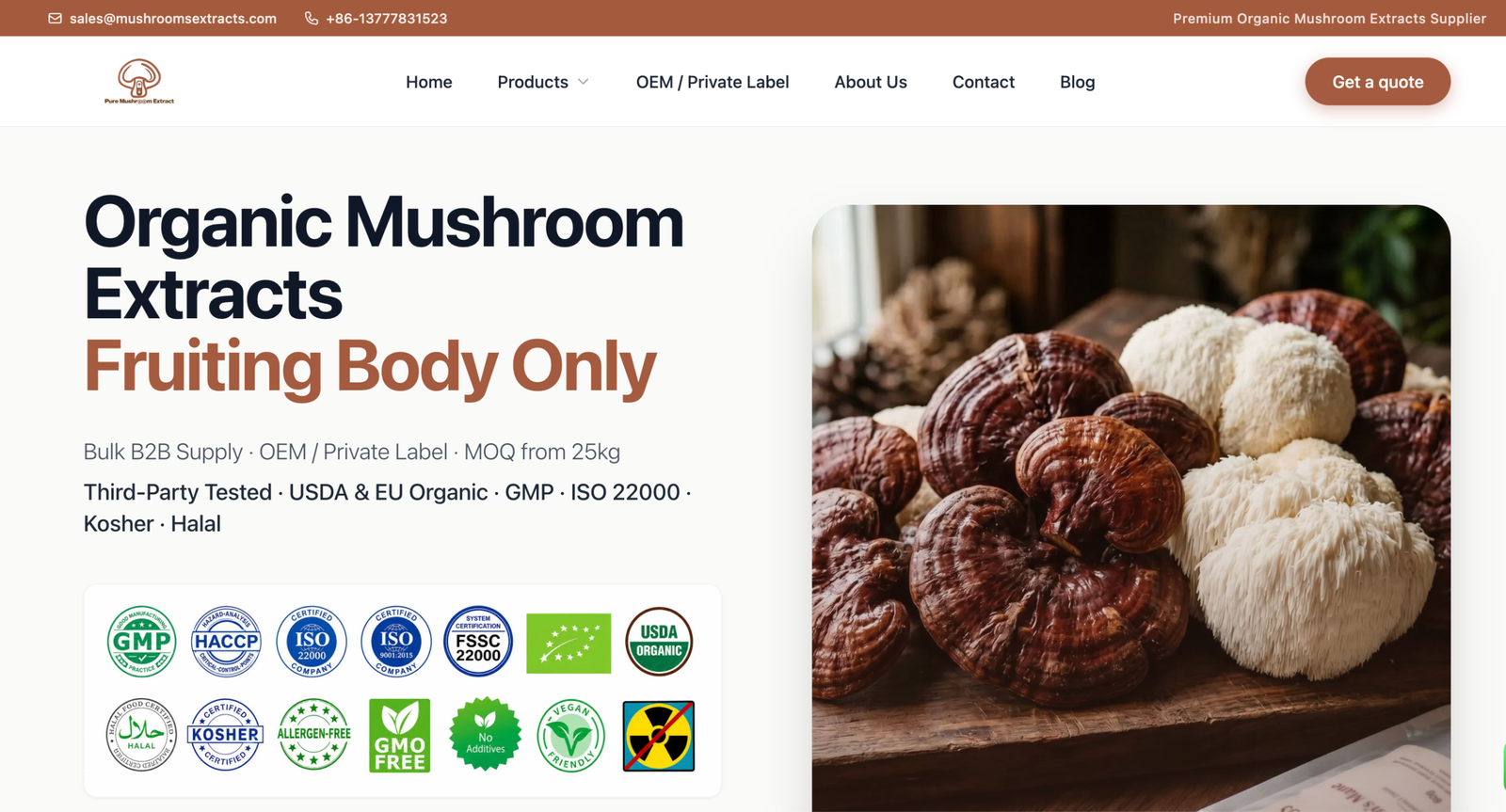
1. Pure Mushroom Extract (Hangzhou Molai Biotech Co., Ltd)
Molai Biotech is a factory-direct manufacturer producing chaga extract powder from 100% wild-harvested sclerotia sourced from Changbai Mountain in China, Siberia, and Northern European birch forests, standardized to polysaccharides 40% or above and betulinic acid 2% or above. It offers both single hot water extraction and dual (water plus ethanol) extraction, with active compounds verified in-house by HPLC and heavy metals tested by AAS, plus a COA issued per batch and third-party verification available on request. The company holds USDA Organic, EU Organic, GMP, ISO 22000, HACCP, Kosher, and Halal certification, and has supplied B2B brands across 15 countries, including Canada, since 2005. What differentiates it from the North American suppliers below is not extraction technology — several match that — but pricing and finished-goods capability: buying factory-direct removes the importer/distributor margin that Canadian resellers typically build in, and Molai’s in-house OEM/private label manufacturing (capsules, custom blends, packaging) means a Canadian brand can source both bulk ingredient and finished product from one supplier. For a brand that can manage direct import logistics, this combination is difficult to match domestically. For a brand that needs Canada-held inventory and short domestic lead times, a nearby supplier will be the better fit — a trade-off addressed further below.
- Country: China (exports to Canada and 14 other countries)
- Address: 491# Fenqing Ave, Xiaoshan District, Hangzhou City, Zhejiang Province, China
- Website: puremushroomextract.com
- Main product: Organic chaga extract powder (polysaccharides ≥40%, betulinic acid ≥2%, beta-glucan ≥20%), full mushroom extract range (reishi, lion’s mane, cordyceps, turkey tail, shiitake, maitake), custom blends, OEM/private label capsule manufacturing. MOQ 25kg, free 50–100g sample shipped within 48 hours, in-stock lead time 7–15 business days, FOB/CIF available.
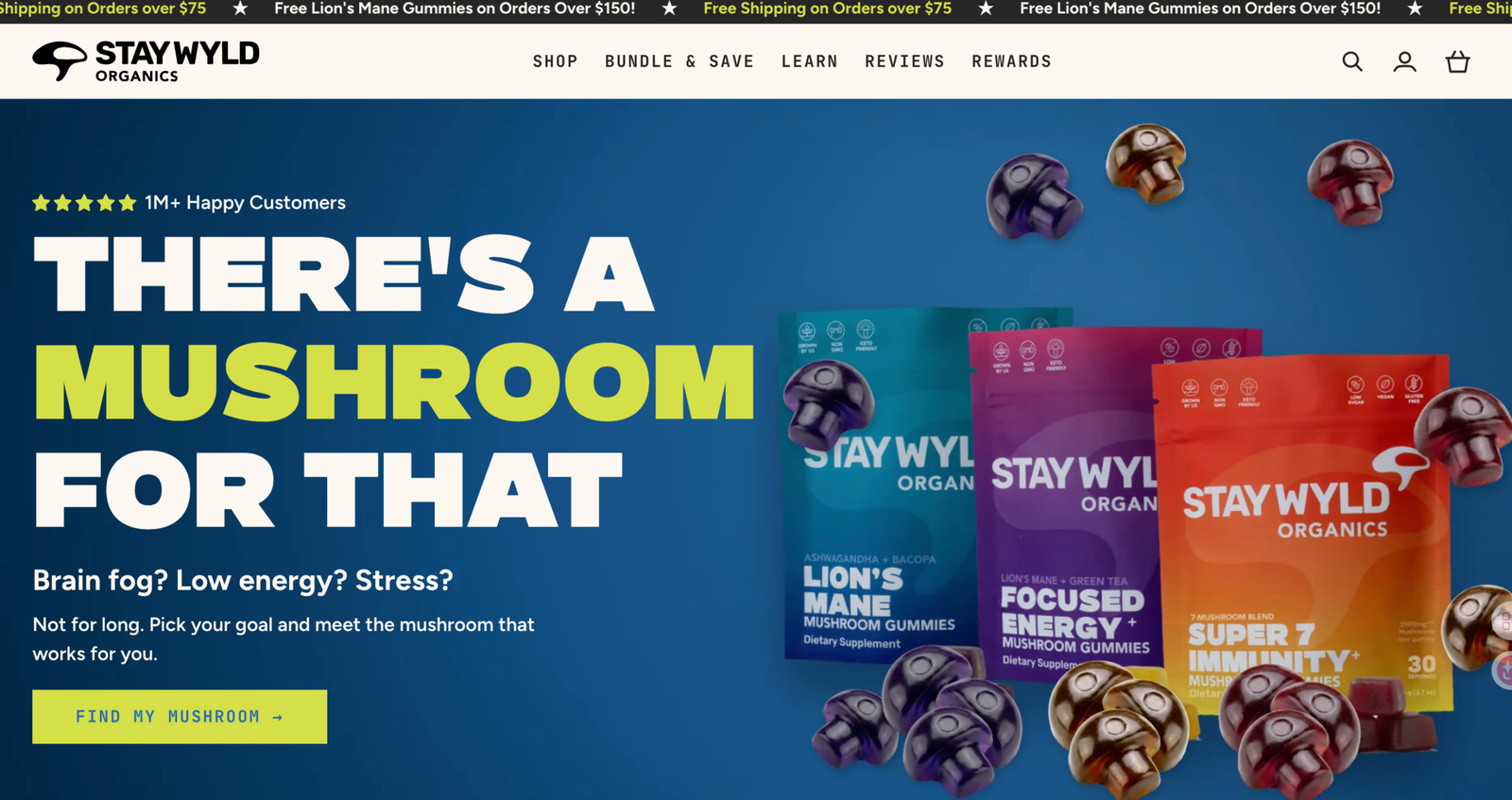
2. Stay Wyld Organics
Stay Wyld Organics is a 100% certified organic Canadian mushroom company operating its own facility in Pemberton, BC, where it grows and dual-extracts its functional mushroom range in-house. Its chaga line spans bulk powder, capsules, and consumer formats, with organic certification through Pro-Cert and a dedicated wholesale program for resellers and bulk buyers, including an online wholesale account application. As one of the only suppliers on this list that controls cultivation, extraction, and packaging under one Canadian roof, it is a strong fit for brands that want full traceability to a single BC facility rather than a wild-foraged, multi-region supply chain.
- Country: Canada
- Address: 1930 Stonecutter Place, PO Box 134, Pemberton, BC V0N 2L0, Canada
- Website: staywyldorganics.com
- Main product: Bulk organic chaga mushroom powder, chaga capsules, and a broader functional mushroom range (lion’s mane, cordyceps, reishi, turkey tail). Wholesale account and bulk pricing available on request.
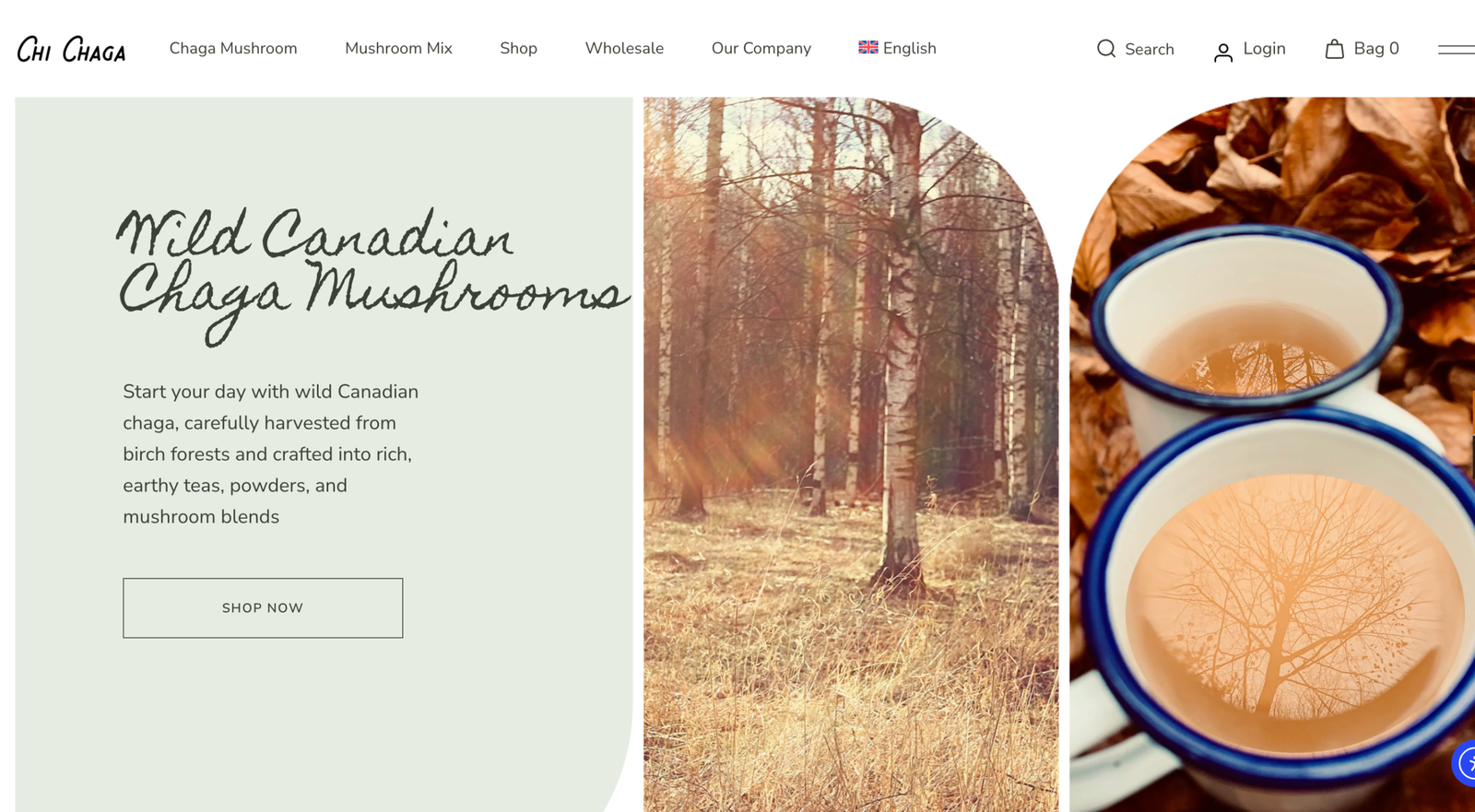
3. Chi Chaga (Chi Chaga Foods Inc.)
Chi Chaga is a Canadian company harvesting wild chaga from birch forests in Quebec, certified organic by Ecocert and FDA registered, using a tree-to-shelf process that includes non-heat crumbling and powdering to preserve the raw material. Wholesale access opens at a 10 lb minimum order, with formats spanning bulk chaga chunks and powder, retail-ready tea bags, capsules, and a “3 Kings” mushroom tea blend combining chaga, lion’s mane, and turkey tail. As the only fully Canadian-grown option on this list, Chi Chaga is the most straightforward choice for brands that specifically want to market Canadian-origin chaga, and its low 10 lb wholesale minimum makes it accessible to smaller brands testing a product line before committing to larger volumes.
- Country: Canada
- Address: Quebec, Canada (chaga wild-harvested from Quebec birch forests)
- Website: chichaga.com
- Main product: Wild Canadian chaga chunks and powder, chaga tea bags, capsules and tinctures, mushroom tea blends. Wholesale MOQ 10 lbs, Canadian and select international shipping.
4. Lemon Lily Tea Wholesale
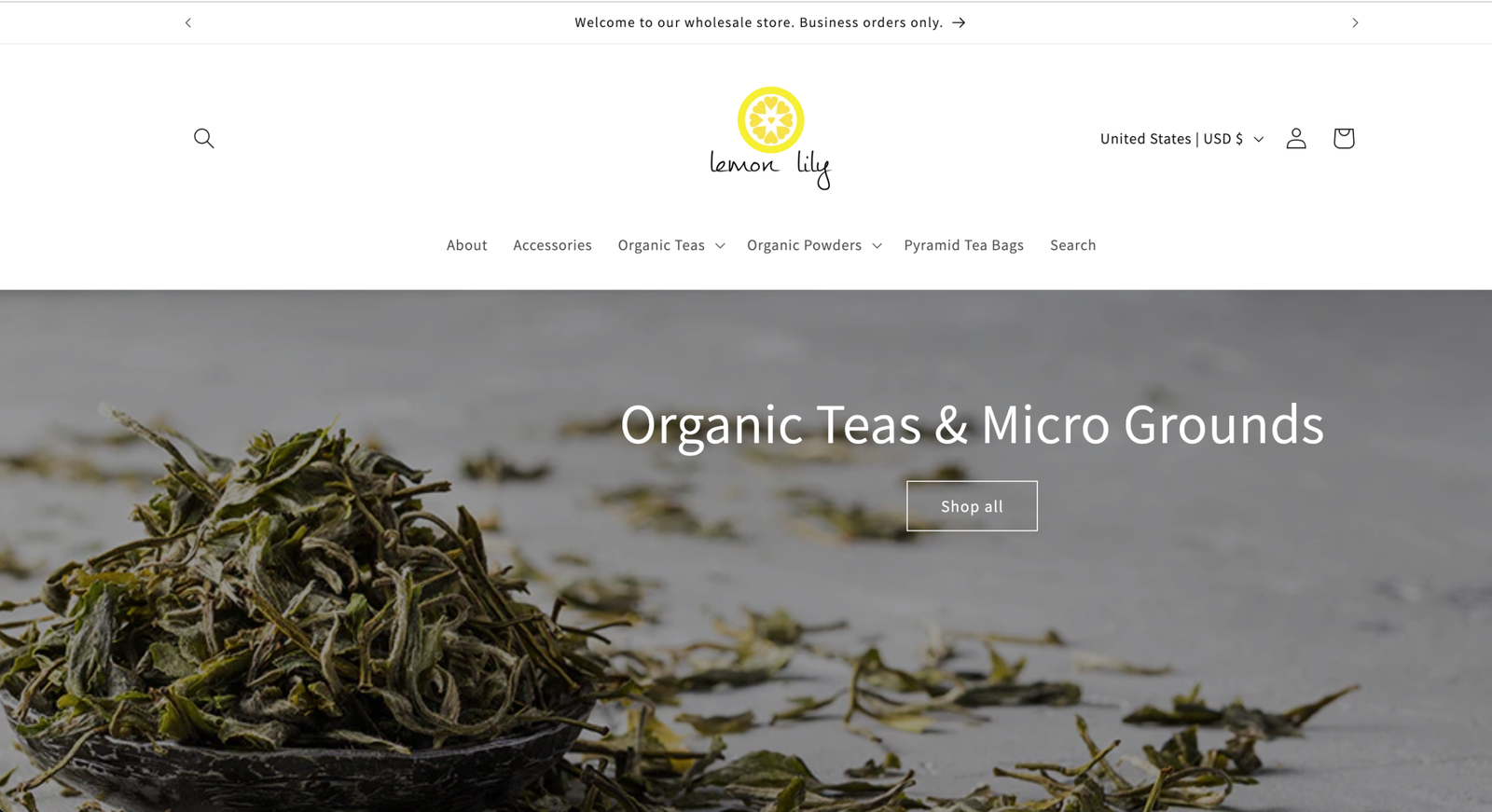
Lemon Lily is a Toronto-based organic tea company with a dedicated wholesale-only storefront (business accounts, not consumer orders) built on more than 200 natural and organic loose-leaf teas and powders sold to cafes, spas, specialty shops, and retailers across Canada. Its chaga mushroom powder is sourced entirely from Ontario and Quebec and sold as an organic, wildcrafted, Canadian-grown ingredient in sizes from a 20g sample up to 1kg and case packs. Lemon Lily is a better fit for a brand building a tea, latte, or beverage-format chaga product than for a supplement manufacturer needing HPLC-verified extract specifications, since its listings emphasize origin and format rather than standardized active-compound percentages.
- Country: Canada
- Address: 117 Manville Rd, Toronto, Ontario, Canada
- Website: lemonlilytea.ca
- Main product: Wildcrafted chaga mushroom powder (Ontario and Quebec sourced), sold in sizes from 20g samples to 1kg and 6-pack cases, alongside a broad wholesale catalog of organic teas and superfood powders.
5. Forbes Wild Foods Inc.
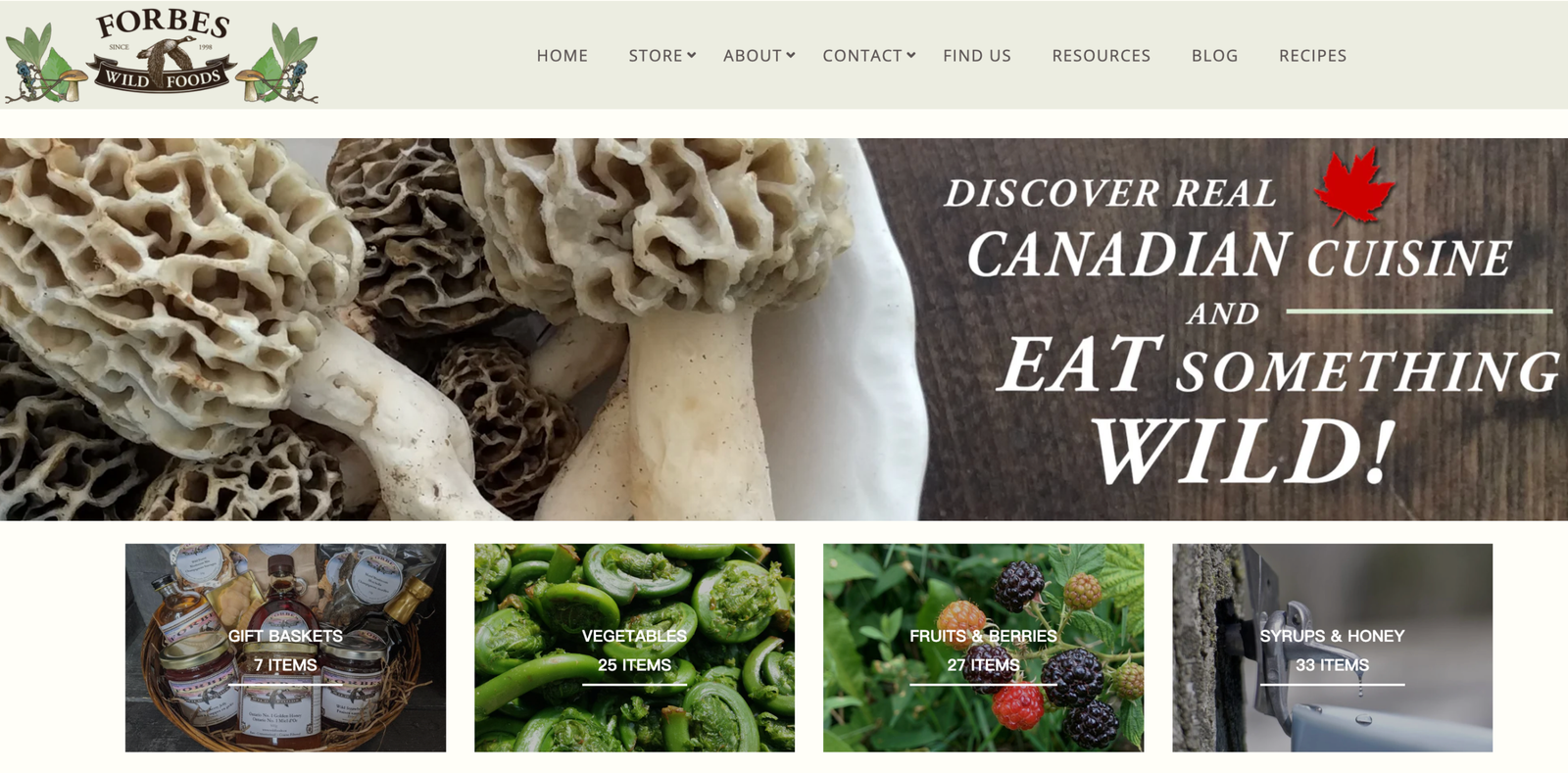
Forbes Wild Foods is a Toronto company describing itself as the largest supplier of wild-harvested Canadian foods, sourcing chaga and other wild ingredients through expert foragers working from the coast of Labrador to the islands of British Columbia. It sells chaga in pieces and powder, with a dedicated Bulk collection built for restaurants, hotels, resorts, specialty stores, food stores, distillers, and brewers, and invites direct contact for bulk pricing and availability. Forbes is best suited to a Canadian brand that values single-origin, hand-harvested traceability and food-service-grade relationships over standardized supplement specifications — buyers formulating capsules or extract-based products should confirm active-compound testing directly, since its listings are written for a culinary and food-service audience rather than a nutraceutical one.
- Country: Canada
- Address: 1385 Danforth Ave, Toronto, Ontario, Canada M4J 1N2
- Website: wildfoods.ca
- Main product: Wild-harvested Canadian chaga (pieces and powder), plus a wider bulk wild foods catalog for food-service and specialty-retail buyers. Bulk pricing and availability confirmed by direct inquiry.
Frequently Asked Questions
Is wild-harvested chaga better than cultivated chaga?
Yes, for compound content. Wild chaga sclerotia grows on birch trees for 10 to 20 years, accumulating betulinic acid and polysaccharides from its host tree that cultivated or substrate-grown chaga does not replicate at the same concentration. Nearly all commercial-grade chaga sold to B2B buyers, including every supplier reviewed above, is wild-harvested rather than cultivated.
What certifications should a chaga supplier have for the Canadian market?
Look for USDA Organic or EU Organic certification, a GMP-certified facility, and — if the finished product will carry a health claim — Health Canada Natural Product Number (NPN) compliance support. A per-batch COA with heavy metal results (arsenic, lead, mercury, cadmium) matters more for chaga than for most functional mushrooms, given its tendency to accumulate trace metals from its host tree.
What is the difference between chaga powder and chaga extract powder?
Chaga powder is dried, milled raw sclerotia with no concentration step, while chaga extract powder has gone through hot water or dual extraction to concentrate polysaccharides and betulinic acid into a standardized, testable specification. Suppliers should disclose which product a given SKU actually is, since the two are not interchangeable in formulation.
What is a typical MOQ for bulk chaga mushroom powder?
MOQs among the suppliers reviewed here range from 10 lbs (Chi Chaga) to 25kg (Molai Biotech), with Stay Wyld Organics, Lemon Lily Tea, and Forbes Wild Foods setting wholesale volumes case by case through direct inquiry. Buyers testing a new product line should confirm both the MOQ and whether a free sample is available before committing to a full order.
Conclusion: Choosing the Right Chaga Supplier for Your Brand
Canada’s chaga category has genuine domestic supply across several regions and business models, so the decision is less about finding a legitimate supplier and more about matching supplier type to order profile. A brand that wants full traceability to one vertically integrated Canadian facility — cultivation, dual extraction, and packaging under one roof — is best served by Stay Wyld Organics in Pemberton, BC. One that wants a Canadian-origin story built around wild-harvested Quebec chaga in flexible chunk, powder, and tea formats fits Chi Chaga. A brand building a tea, latte, or beverage-format product fits Lemon Lily Tea Wholesale, while one that values single-origin, hand-foraged provenance and food-service relationships fits Forbes Wild Foods. A brand ordering larger recurring volumes, that needs standardized, HPLC-verified dual-extract chaga plus OEM finishing under one roof, and that can manage direct import logistics gets the strongest per-kilogram pricing from a factory-direct manufacturer like Molai Biotech. All company information in this review is drawn from each supplier’s own published sourcing, certification, and MOQ information and is presented as such — no company or figure here has been invented.