For B2B buyers sourcing mushroom extract powder, the choice between hot water extraction and dual extraction comes down to one question: does your target mushroom contain alcohol-soluble actives that hot water alone cannot capture? Key decision points:
Match QC method to extraction type: polysaccharides via UV spectrophotometry; triterpenes and active markers via HPLC; heavy metals via AAS — request batch-specific third-party reports for each.
- Default to hot water extraction when your COA spec focuses on Beta-Glucan and polysaccharides — it applies to Lion’s Mane (Beta-Glucan ≥30%), Turkey Tail (Beta-Glucan ≥30%, PSK/PSP), Shiitake (Beta-Glucan ≥30%, Lentinan), Maitake (Beta-Glucan ≥20%), and Cordyceps (cordycepin is water-soluble). Hot water extraction delivers cleaner process validation, lower cost, and fewer solubility tradeoffs.
- Require dual extraction for Reishi — triterpenes (ganoderic acids) are alcohol-soluble and cannot be meaningfully captured by hot water alone. If your spec requires triterpenes ≥2%, dual extraction is non-negotiable.
- Verify extraction order before approving a supplier: hot water must come first (to preserve Beta-Glucan solubility), followed by ethanol fractionation. Reversing the sequence degrades Beta-Glucan bioavailability.Ask your supplier to provide their extraction SOP and walk you through the sequence step by step. A supplier who cannot explain this clearly — or who deflects the question — is a red flag for process maturity.
- Match QC method to extraction type: polysaccharides via UV spectrophotometry; triterpenes and active markers via HPLC; heavy metals via AAS — request batch-specific third-party reports for each.
What is Dual Extraction for Mushroom Extract Powder — and When Do B2B Buyers Actually Need It?
Dual extraction is a two-step process that combines hot water extraction and ethanol extraction to pull a broader range of mushroom actives into a powder or extract. It’s primarily used when a mushroom contains both water-soluble polysaccharides/Beta-Glucan and alcohol-soluble compounds like triterpenes. For B2B sourcing, it’s the method that enables “polysaccharides + triterpenes” specs in one ingredient.
Core Technology: Sequential extraction—hot water first for polysaccharides/Beta-Glucan, then ethanol fractionation to recover lipophilic compounds (e.g., triterpenes in Reishi).
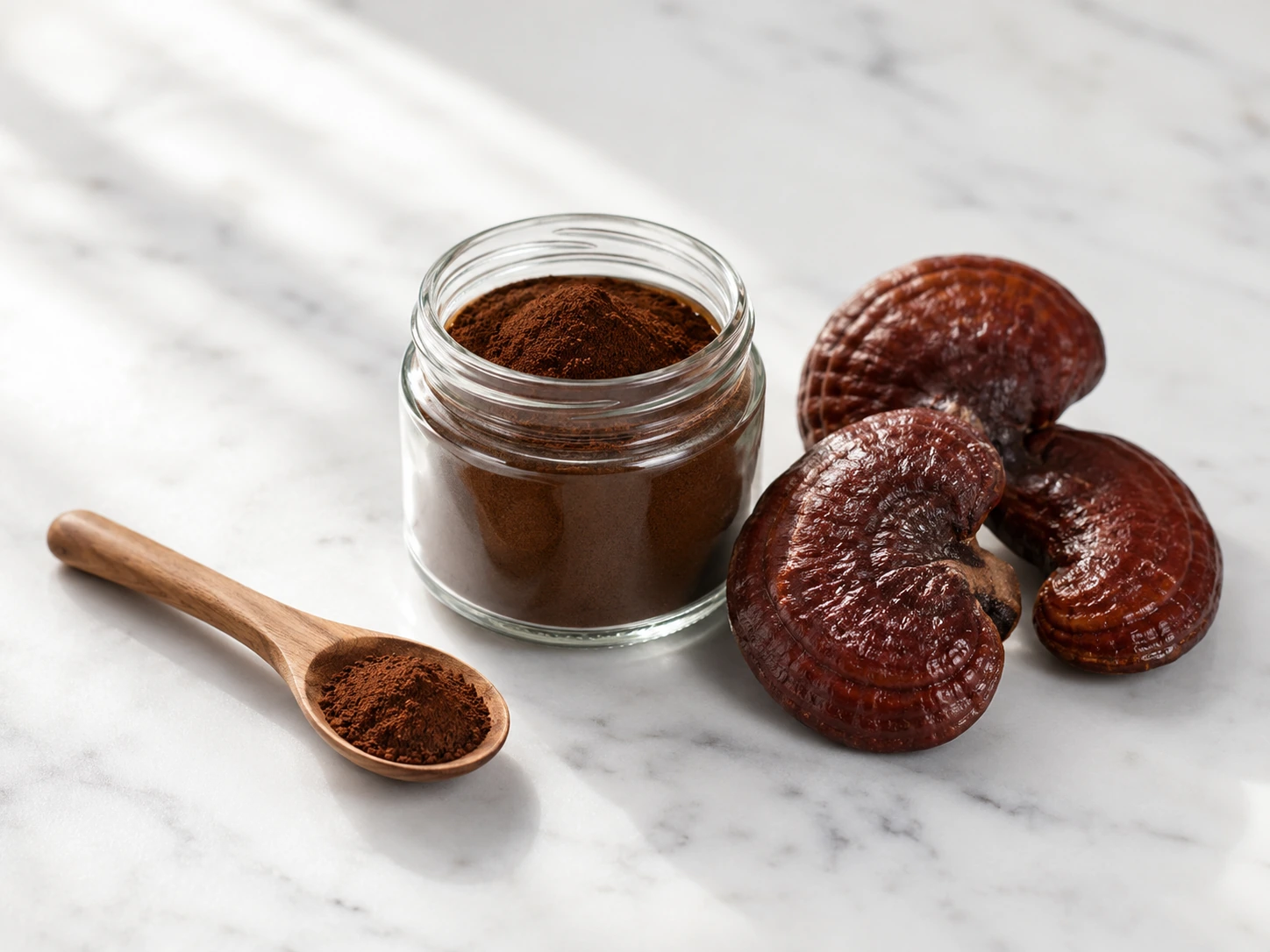
Best-Fit Mushrooms: Reishi (Ganoderma lucidum), where triterpenes are a core efficacy/spec marker (e.g., triterpenes ≥2% alongside polysaccharides ≥30%, Beta-Glucan ≥20%).
Key Output Specs (Example): Reishi dual extract: polysaccharides ≥30%, triterpenes ≥2%, Beta-Glucan ≥20% (customizable).
Process Flow (Manufacturing): Raw material → Extraction → Concentration → Spray drying → Sieving → QC testing → Packaging → Shipment.
QC & Test Methods: Polysaccharides (UV spectrophotometry); triterpenes (ethanol extraction fractionation); active quantification (HPLC); heavy metals (AAS); Beta-Glucan (custom spec available).
Risk/Tradeoff to Watch: Research shows ethanol can reduce Beta-Glucan solubility after ethanol precipitation (mechanism shown in cereal Beta-Glucan studies), so extraction design (e.g., membrane separation) matters if “instant solubility” is a buying criterion.
Hot Water Extraction for Mushroom Powder: The Default Method for Beta-Glucan Specs
Hot water extraction uses water (often at elevated temperature/pressure) to extract water-soluble actives from mushrooms—especially polysaccharides and Beta-Glucan. It’s the default choice for many functional mushrooms where the main markers are water-soluble and where a clean label, cost-efficiency, and high polysaccharide yields matter most. For B2B buyers, it’s typically the easiest path to strong Beta-Glucan or polysaccharide specs.
Core Technology: Water-based extraction of water-soluble fractions (polysaccharides, Beta-Glucan; and for Cordyceps, cordycepin is water-soluble).
Best-Fit Mushrooms (Spec-Driven):
- Lion’s Mane hot water extract: Beta-Glucan ≥30%
- Turkey Tail hot water extract: Beta-Glucan ≥30% + PSK/PSP
- Shiitake hot water extract: Beta-Glucan ≥30% + Lentinan
- Maitake hot water extract: Beta-Glucan ≥20% + D-Fraction
- Chaga hot water extract: polysaccharides ≥40% + Betulinic Acid
Process Levers (Buyer-Relevant): Temperature/pressure/time drive yield; parameters vary by species and raw material quality (do not copy one mushroom’s “optimal condition” to another).
Evidence Notes (Use Carefully):
- Reishi fruiting body Beta-Glucan content reported ~34.2% (dry weight); pressurized hot water + CO₂-assisted extraction reported yields up to 72.5% (Reishi-specific literature).
- For Chaga, high-concentration ethanol conditions can deliver the lowest polysaccharide yield, while water extraction performs better for polysaccharides (Chaga-specific literature).
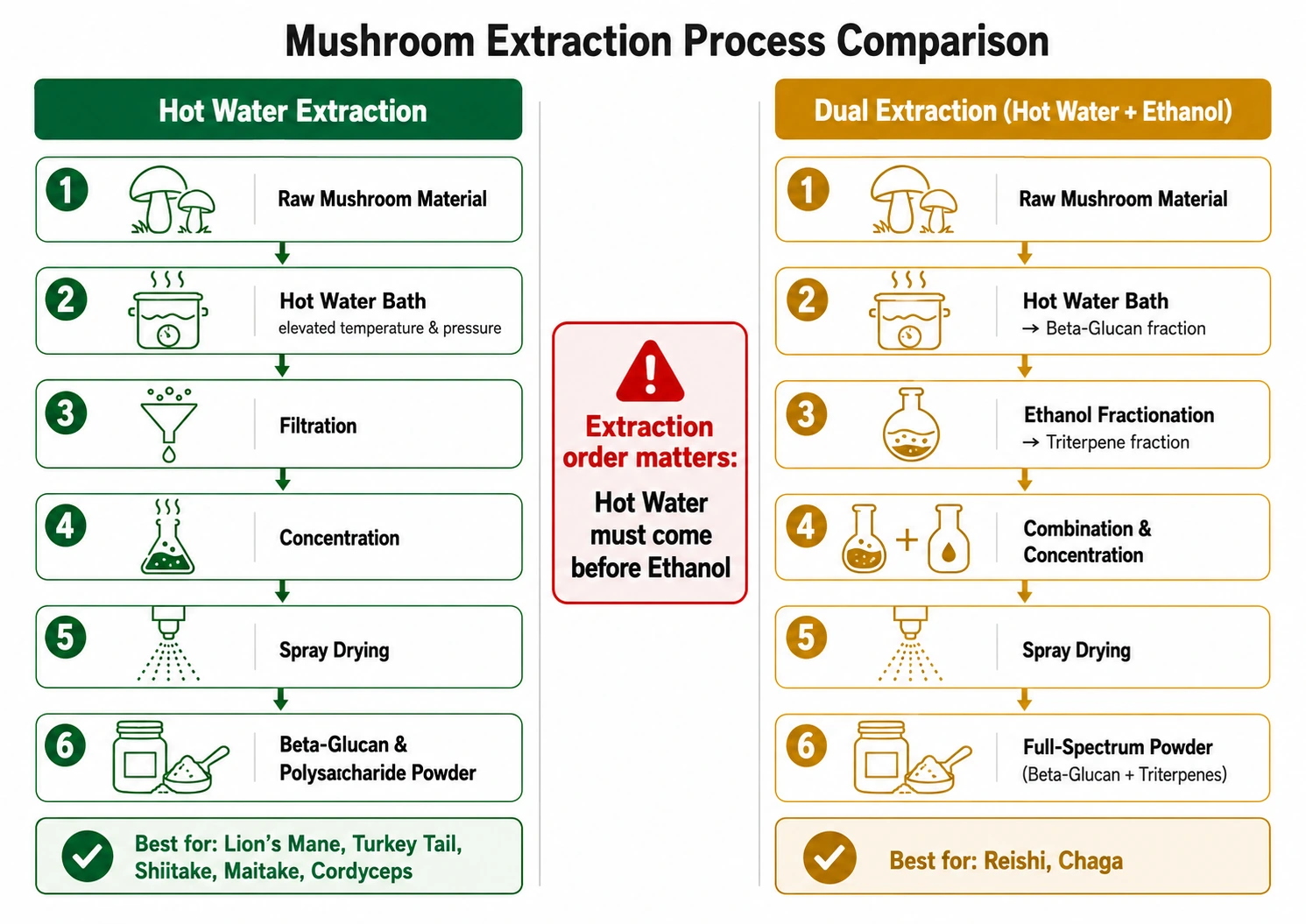
Dual Extraction vs Hot Water Extraction: Side-by-Side Comparison for Supplement Sourcing
| Dimension | Dual Extraction (Hot Water + Alcohol) | Hot Water Extraction |
|---|---|---|
| Target actives | Water-soluble polysaccharides/Beta-Glucan plus alcohol-soluble fractions (e.g., triterpenes) | Primarily water-soluble polysaccharides and Beta-Glucan |
| Best use-case | Reishi where triterpenes are a key spec (e.g., ≥2%) | Lion’s Mane, Turkey Tail, Shiitake, Maitake, Chaga; Cordyceps often fits (cordycepin is water-soluble) |
| Typical B2B spec positioning | “Full-spectrum” positioning; enables combined markers (polysaccharides + triterpenes) | High Beta-Glucan/polysaccharide claims with simpler solvent story |
| Cost/complexity | Higher (extra solvent step, recovery, tighter controls) | Lower (simpler equipment and validation) |
ClearFilter Pro Tip: We recommend you start from the marker compound that drives your buyer’s COA acceptance—if the tender/spec demands triterpenes (common in Reishi), use dual extraction; if it’s Beta-Glucan/polysaccharides, hot water extraction is usually the cleanest, most cost-effective way to hit targets with fewer solubility tradeoffs when working with a hot water/alcohol mushroom extract supplier.
Which Extraction Method Should B2B Buyers Choose?
Dual extraction is a precision tool: pay for it when you need alcohol-soluble actives (especially Reishi triterpenes). For most other functional mushrooms where the commercial markers are polysaccharides and Beta-Glucan, hot water extraction is typically the best-value choice—simpler, scalable, and aligned with common COA specs from a hot water/alcohol mushroom extract supplier.
A Case Study in What “Cheap Dual Extract” Actually Costs
A few years ago, we began working with a supplement brand based in Europe — a mid-sized operation selling functional mushroom products through health retail channels. Before they came to us, they had been sourcing Reishi dual extract from a supplier they’d found through a trade platform, at a price that was, in their words, “hard to argue with.”
The problems didn’t show up immediately. The supplier’s own COA looked acceptable — polysaccharides within range, heavy metals passing, no obvious red flags on paper. But when the brand ran a routine third-party verification through a local accredited lab, the triterpene figures came back significantly lower than declared. Not a small variance. The kind of gap that points to a process problem, not a measurement difference.
When they dug further, the picture got worse. The raw material their supplier was using wasn’t coming from contracted cultivation — it was sourced from the open market, where downgraded and moisture-damaged mushrooms trade at a steep discount. Once dried mushroom material goes into an extraction tank, you can’t see the mold history. But a full mycotoxin panel will find it.
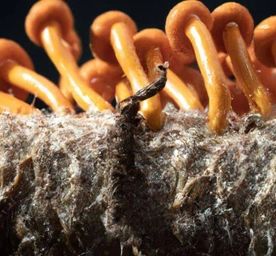
There was a second issue that only became clear later. The spent extraction solids — the mushroom residue left after the active compounds have been pulled into solution — had been dried and blended back into the final powder to increase volume. It’s a practice that’s more common than the industry likes to admit. The result is a powder that looks like an extract and loosely resembles one on a basic UV polysaccharide test, but has a fraction of the active compound concentration of a genuine extract. You’re essentially buying the husk of a process, not the output of one.
The production environment compounded everything. No cleanroom separation. No air handling. Shared equipment without documented cleaning validation between batches. The kind of facility that can hold a basic food certificate on paper while running conditions that would fail any serious GMP audit on the floor.
They contacted us after their own retail customer — a pharmacy chain — flagged inconsistency between product batches and requested documentation the brand couldn’t produce.
The transition process was straightforward. We provided three non-consecutive batch COAs with corresponding Eurofins third-party reports. They requested a factory walkthrough — we accommodated it within the same week, no preparation, no staging. From cultivation through extraction, spray drying, and packaging, everything is within our own facility. There’s nothing to hide because there’s nothing being hidden.
Their first order cleared third-party testing without issue. So did the second. And the third.
They’ve been a consistent buyer since.
The point of this isn’t to position every low-cost supplier as fraudulent — there are cost differences that reflect genuine operational choices, and not every budget extract is a bad one. But when dual extraction pricing comes in at or near hot water extract levels, the gap has to be explained somewhere. It’s usually explained in the raw material, the process integrity, or both.
Price is a signal. It’s worth listening to it.
FAQ
Which mushrooms “must” use dual extraction for B2B specs?
Reishi is the clearest case because triterpenes are a core specification marker (e.g., triterpenes ≥2%) that hot water extraction alone won’t capture well.
When is hot water extraction enough?
When your purchasing spec focuses on water-soluble markers like polysaccharides and Beta-Glucan (common for Lion’s Mane, Turkey Tail, Shiitake, Maitake, and often Chaga).
What QC methods should we request from a hot water/alcohol mushroom extract supplier?
Ask for polysaccharides (UV), active quantification (HPLC), heavy metals (AAS), and the exact marker specs required by your product (e.g., triterpenes for Reishi; Beta-Glucan for many others).
Do I need dual extraction for all mushroom extract powders?
No. Dual extraction is only necessary when the mushroom contains therapeutically important alcohol-soluble compounds that hot water cannot adequately capture. In practice, this means Reishi — where triterpenes such as ganoderic acids are a core specification marker — and Chaga, where betulinic acid requires ethanol fractionation alongside water-soluble polysaccharides. For Lion’s Mane, Turkey Tail, Shiitake, Maitake, and Cordyceps, the primary active markers (Beta-Glucan, polysaccharides, cordycepin) are water-soluble, making hot water extraction the most cost-effective and technically appropriate choice.
What triterpene specification should I require for Reishi dual extract?
Industry-standard dual extract Reishi is typically specified at triterpenes ≥2% alongside polysaccharides ≥30% and Beta-Glucan ≥20%. Some premium-tier specifications target triterpenes ≥4%. Ask your supplier to specify both the test method used (HPLC is standard) and the exact compounds being measured — “total triterpenes” should be clearly defined and backed by a third-party COA, not just an in-house test result.
Does dual extraction always produce a higher-quality extract than hot water extraction?
Not for most mushrooms. Dual extraction captures a broader compound profile, but if your product formulation only requires Beta-Glucan and polysaccharide markers, adding an ethanol step introduces unnecessary cost, more complex solvent validation, and potential solubility tradeoffs. Research indicates that Beta-Glucan precipitated with ethanol is less water-soluble than Beta-Glucan isolated through membrane separation — which matters if your downstream application requires rapid dispersion in beverages or powders.
What QC documents should I request to verify the extraction method was correctly performed?
Request a batch-specific COA showing individual marker results (not just a pass/fail), the test method references (UV for polysaccharides, HPLC for triterpenes and cordycepin, AAS for heavy metals), and an independent third-party lab report from an accredited facility such as Eurofins or SGS. For dual extraction products, ask for separate confirmation that residual ethanol has been tested and meets food-grade compliance limits.
Why does extraction order matter in dual extraction?
The sequence is critical. Hot water extraction must come first to preserve Beta-Glucan solubility — if ethanol is applied first, it causes Beta-Glucan to precipitate in a form that is harder to dissolve in the final product. A supplier who cannot explain their extraction sequence clearly is a red flag for process maturity.
How does extraction method affect formulation performance in supplements?
Extraction method directly influences solubility, taste, and powder flow. Hot water extracts typically dissolve well in warm water and have a milder taste. Dual extract powders — particularly those with higher triterpene fractions — tend to be more bitter and may require taste-masking in consumer formulas. Request pilot samples and run a small bench test in your actual formulation before committing to volume, regardless of which method your supplier uses.