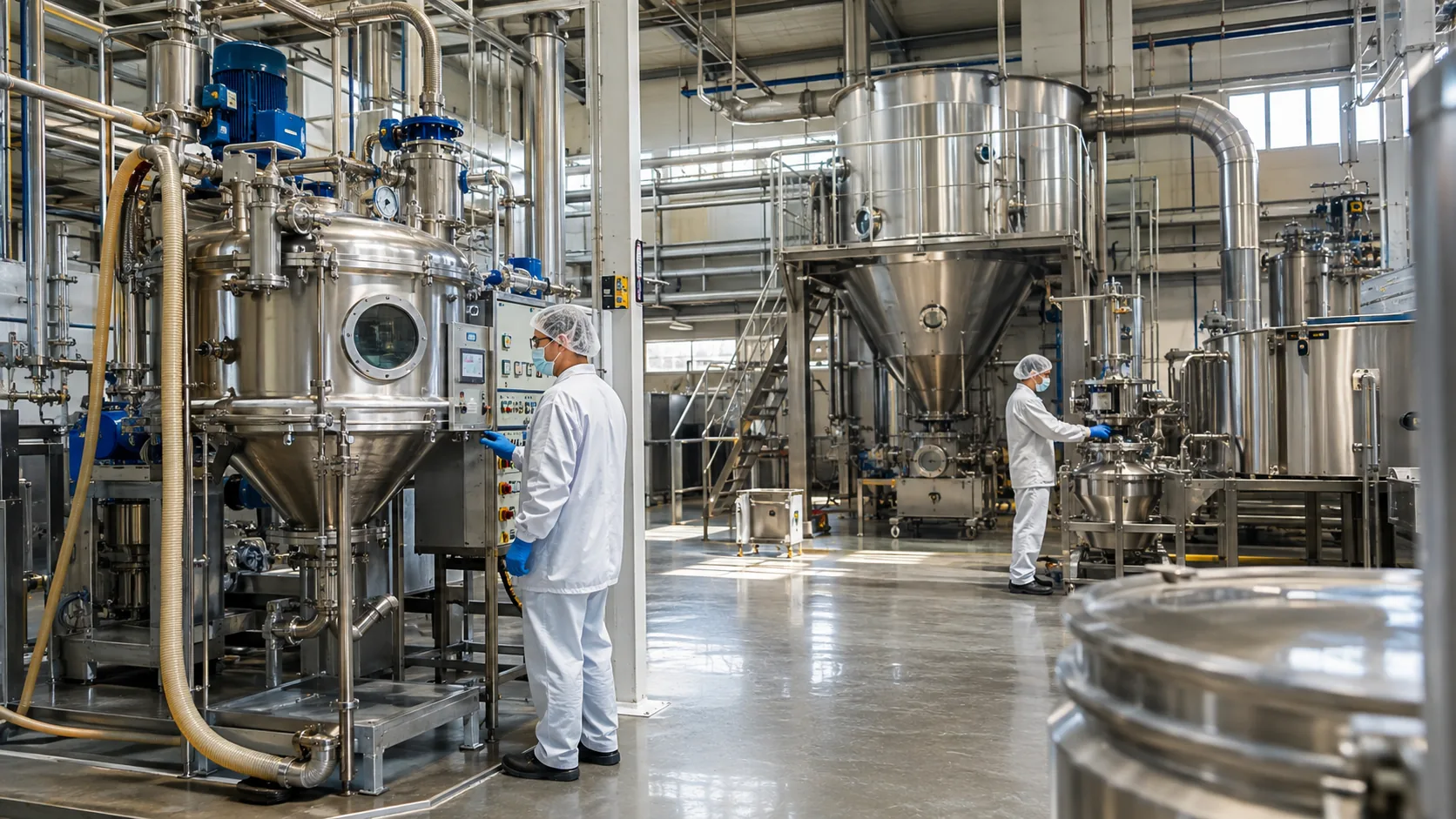
Canadian supplement, beverage, and functional-food brands can source chaga extract from domestic ingredient suppliers, North American distributors, or overseas extraction factories. The right choice depends on more than the supplier’s location. Buyers need to compare the exact chaga material used, extraction method, active-compound specification, batch testing, minimum order quantity, documentation, and total landed cost in Canada.
This guide reviews six suppliers with public information relevant to commercial chaga sourcing. It focuses on bulk extract powder and B2B procurement rather than consumer capsules or tea products.
Disclosure and ordering method: This article is published by Hangzhou Molai Biotech, which operates PureMushroomExtract.com and is included below. To avoid presenting a commercial relationship as an independent ranking, the six companies are listed alphabetically and evaluated against the same public-information checklist. Inclusion is not a certification, endorsement, or guarantee. Buyers should qualify the current production lot and regulatory documents before purchase.
Quick Comparison of Chaga Extract Suppliers
| Supplier | Supply model | Published chaga format | Published order information | Best-fit buying scenario |
|---|---|---|---|---|
| Green Jeeva Canada | Canada-based bulk ingredient supplier | Extract powder standardized to 50% polysaccharides | 25 kg MOQ and 25 kg packaging | Canadian manufacturers seeking a local procurement contact and a defined polysaccharide specification |
| Hangzhou Molai Biotech | Factory-direct extract manufacturer in China | Hot-water or dual-extract powder from wild-harvested sclerotia | 25 kg MOQ; batch COA and origin documents available | Recurring bulk programs that need custom specifications, direct factory supply, or OEM support |
| Mountain Rose Herbs | US botanical wholesaler | Organic 1:1 hot-water extract powder | Wholesale program; 10+ lb bulk tier shown | Small and midsize buyers that value low-volume access and organic botanical sourcing |
| Mushroom Plenty | US mushroom ingredient supplier | 4:1 hot-water extract with at least 15% beta-glucans | 1 kg MOQ; ships from Newark, New Jersey | Product development, pilot runs, and contract manufacturers needing low initial quantities |
| Nammex | Canadian mushroom-extract ingredient company | RealChaga® hot-water/alcohol extract powder | Commercial samples and sales qualification by inquiry | Brands prioritizing mushroom identity, active-compound testing, and established ingredient specialization |
| Vivion | North American wholesale ingredient distributor | Bulk chaga mushroom ingredient; current extract ratio is not published | Product page mentions both 25 kg and 50 kg minimums, so confirm by quote | Buyers consolidating multiple ingredients through one distributor |
The table is a screening tool, not a substitute for a current quotation, specification sheet, lot-specific certificate of analysis, and Canadian regulatory review.
What Canadian Buyers Should Verify Before Ordering
1. Raw chaga powder versus chaga extract powder
Raw chaga powder is milled sclerotium with no concentration step. Extract powder has been processed with hot water, alcohol, or both, then concentrated and dried. These materials can behave differently in capsules, drink powders, coffee blends, and liquid formulations. Ask the supplier to identify the starting material, extraction solvent, extract ratio, carrier content, and final assay rather than relying on the word “chaga” alone.
2. Chaga identity and plant part terminology
Chaga is the sterile conk or sclerotium of Inonotus obliquus, not a conventional mushroom fruiting body. Supplier pages sometimes use “fruiting body” as a broad marketing term. Canadian buyers should request the botanical name, material description, identity test, harvest origin, and a specification that clearly states whether the input is wild-harvested sclerotium, cultivated mycelium, or another form.
3. Beta-glucans, polysaccharides, and triterpenes
Total polysaccharides and beta-glucans are not interchangeable measurements. A high polysaccharide number can include non-target carbohydrates, while beta-glucan methods focus more narrowly on fungal structural polysaccharides. If the commercial brief also requires betulin, betulinic acid, or other triterpenes, request the named analytical method and acceptance limit. Compare suppliers only when the test method, dry basis, units, and specification are equivalent.
4. Contaminant and solvent testing
Wild-harvested chaga can reflect environmental conditions at the harvest site. A commercial qualification package should address heavy metals, microbiology, pesticides where applicable, and residual solvents for alcohol-extracted material. Request a lot-specific COA and confirm that the laboratory method and limits are suitable for the intended Canadian product category.
5. Canadian regulatory route
A chaga capsule, tincture, beverage mix, or food ingredient may follow a different Canadian regulatory pathway depending on formulation, dosage form, claims, and conditions of use. If the finished product will be sold as a natural health product, review the applicable Health Canada product- and site-licensing requirements. Start with Health Canada’s Natural and Non-prescription Health Products resources and the Natural Health Products Ingredients Database, then confirm the final route with a qualified Canadian regulatory professional.
<!– IMAGE 2: Insert after the Canadian regulatory route section | Visual: Original flowchart from ingredient qualification to Canadian food or natural-health-product review | Alt: “Chaga extract qualification and Canadian regulatory review workflow” | Source: original diagram –>
The 6 Chaga Extract Manufacturers and Suppliers
1. Green Jeeva Canada
Green Jeeva Canada presents a straightforward specification for Canadian commercial buyers: chaga mushroom extract powder standardized to 50% polysaccharides, supplied in 25 kg food-grade packaging with a 25 kg MOQ. Its product page describes batch evaluation for microbiology and heavy metals and states that a batch-specific COA is available for qualification.
The company positions the ingredient for nutraceutical powders, supplements, and functional beverages. Its Canada-facing supply model can simplify communication and recurring procurement for manufacturers that prefer a domestic supplier relationship. However, the page lists country of origin as available on request and does not publish an extract ratio or beta-glucan minimum. Those points should be resolved before comparing its 50% polysaccharide specification with other products.
What to request: country of origin, starting-material description, extract ratio, beta-glucan result, extraction solvent, carrier percentage, current COA, allergen statement, and Canadian warehouse availability.
Best fit: Canadian manufacturers that want 25 kg commercial packs, a published polysaccharide target, and local B2B coordination.
2. Hangzhou Molai Biotech
Hangzhou Molai Biotech’s chaga extract is a factory-direct option for Canadian brands purchasing recurring bulk quantities. The company publishes a 25 kg MOQ, 25 kg foil-bag packaging, hot-water and water-plus-ethanol extraction options, and a specification of at least 40% polysaccharides, at least 20% beta-glucans, and at least 2% betulinic acid. The starting material is described as wild-harvested chaga sclerotia sourced from Changbai Mountain, Siberia, and Northern European birch regions.
The product page states that each batch can be supported with a COA covering polysaccharides, betulinic acid, heavy metals, and microbiology, with origin documentation and third-party verification available on request. The company’s about page describes in-house HPLC testing for active compounds, AAS heavy-metal testing, hot-water and dual extraction, and bulk and OEM/private-label capabilities.
For Canadian buyers, the main advantage is control over the requested extract specification and the ability to combine bulk ingredients, custom blends, and finished-product support with one manufacturer. The trade-off is import management: buyers must compare freight, customs clearance, inventory timing, currency, and regulatory documentation against Canada- or US-held stock.
Relationship disclosure: Hangzhou Molai Biotech is the publisher of this article. Its information is presented from the same type of public product and company pages used for the other suppliers. Buyers should still verify the current certification documents, lot COA, sample, and landed quotation independently.
What to request: current lot COA, test methods for each active marker, organic and GMP certificates relevant to the quoted lot and facility, residual-solvent results for dual extract, origin certificate, sample, Incoterm, freight estimate, and Canadian import documentation.
Best fit: supplement brands and contract manufacturers buying 25 kg or more that need a defined active-compound specification, direct factory communication, custom blending, or OEM support.
3. Mountain Rose Herbs
Mountain Rose Herbs offers an organic chaga extract powder through its wholesale botanical program. The company describes a one-to-one extract made by processing wild-collected chaga with water at 90–100°C for three hours, concentrating the decoction, and spray drying it while retaining the original material. The product page identifies organic and EarthKosher certification and displays a 10+ lb bulk purchasing tier.
This model is useful for Canadian buyers who need more than a sample but are not ready for a full 25 kg production lot. It also suits formulators already purchasing herbs or botanical extracts from the same distributor. The published page does not provide a standardized beta-glucan, polysaccharide, or triterpene minimum, so buyers with a label or formulation target should request the current specification and COA before approval.
What to request: available pack sizes, Canadian shipping terms, botanical identity method, harvest origin, beta-glucan and total polysaccharide results, carrier content, heavy-metal limits, current organic certificate, and lot COA.
Best fit: small and midsize brands seeking organic chaga extract in sub-25 kg quantities through an established botanical wholesaler.
4. Mushroom Plenty
Mushroom Plenty’s chaga extract is positioned for B2B buyers that need a low starting quantity. The product page publishes a 1 kg MOQ, a 4:1 hot-water extract, and a guaranteed beta-glucan level of at least 15%. It also states that the product is made from chaga material without grain filler, ships from Newark, New Jersey, and is supported by a lot-specific COA. A representative sample COA is linked on the page.
The 1 kg MOQ can reduce development risk for Canadian startups, beverage formulators, and contract manufacturers running pilot batches. US-held stock may also be easier to replenish than a direct overseas shipment, although Canadian buyers still need to calculate cross-border freight, brokerage, taxes, and lead time.
The supplier lists USDA Organic, GMP, Kosher, and Halal credentials on the product page. Buyers should obtain the current certificate copies and confirm that their scope covers the quoted product, production facility, and lot.
What to request: current COA, certificate scope, precise chaga material description, origin, carrier or excipient disclosure, contaminant results, sample availability, Canadian shipping cost, and lead time.
Best fit: pilot runs, emerging brands, and formulators that need a published beta-glucan minimum without committing to a 25 kg first order.
5. Nammex
Canada-based Nammex supplies RealChaga®, a chaga extract processed with hot water and alcohol into a fine powder for capsules, beverages, and other commercial formulations. Nammex states that its chaga is certified organic, wildcrafted in China through production partners, and tested for identity and active compounds. Its company information emphasizes mushroom-only extracts, no grain filler, beta-glucan analysis, and third-party-verified testing supplied with commercial samples.
Nammex is a strong candidate for buyers that prioritize mushroom-specific ingredient expertise and a Canadian supplier relationship. Its public chaga page explains the material and extraction approach but does not display MOQ, price, standard assay, carrier content, or lead time. Those commercial and technical details require direct qualification.
What to request: standard RealChaga® specification, beta-glucan and triterpene results, extraction-solvent and residual-solvent data, harvest origin and traceability, current organic certificate, lot COA, MOQ, sample size, Canadian inventory status, and lead time.
Best fit: established Canadian brands that value specialized mushroom sourcing, identity controls, and local technical communication.
6. Vivion
Vivion is a North American wholesale ingredient distributor offering bulk chaga to commercial customers. The company highlights distribution inventory, regulatory documentation, quotation-based sales, and the ability to consolidate chaga with other ingredients and chemicals.
Vivion can be relevant when a Canadian manufacturer values distributor service and multi-ingredient purchasing more than a branded mushroom-extract program. Its public chaga page currently has two points that require clarification: it refers broadly to “Chaga Mushroom” without publishing an extract ratio or active-compound specification, and it mentions both a 50 kg wholesale minimum and quantities starting at 25 kg. Buyers should therefore treat the page as a sourcing lead and confirm that the quoted SKU is an extract powder—not raw chaga powder—before including it in a formulation comparison.
What to request: exact product name, raw powder versus extract status, extract ratio, starting material, country of origin, carrier content, assay, test methods, current COA, warehouse location, confirmed MOQ, and Canadian landed quote.
Best fit: manufacturers consolidating several raw materials through one distributor and prepared to complete detailed SKU qualification.
How to Choose the Right Supplier for Your Program
Choose by the constraints of the finished product rather than by a universal “best supplier” label:
- For Canadian technical support and mushroom specialization: compare Nammex with Green Jeeva Canada’s domestic procurement model.
- For a defined high-polysaccharide specification: evaluate Green Jeeva Canada’s 50% polysaccharide product alongside the full analytical method and beta-glucan result.
- For direct factory supply and custom specifications: evaluate Hangzhou Molai Biotech once annual volume can support the 25 kg MOQ and import workflow.
- For pilot production: Mushroom Plenty’s published 1 kg MOQ or Mountain Rose Herbs’ 10+ lb tier may reduce first-order exposure.
- For organic botanical sourcing at smaller volumes: review Mountain Rose Herbs’ 1:1 water extract and current certification package.
- For consolidated distribution: ask Vivion to quote the exact chaga extract SKU and confirm the conflicting minimum-order information.
<!– IMAGE 5: Insert after the supplier-selection bullets | Visual: Original decision tree based on MOQ, Canadian stock, standardized actives, organic status, and OEM needs | Alt: “Decision tree for selecting a bulk chaga extract supplier” | Source: original diagram –>
A Practical RFQ Checklist
Send the same request to every shortlisted supplier so quotations are comparable:
- Product name and botanical name: Inonotus obliquus.
- Starting material: wild-harvested sclerotium, cultivated mycelium, or other form.
- Harvest country and region, with origin documentation.
- Extraction method, solvent, extract ratio, and concentration basis.
- Carrier or excipient name and percentage.
- Specification limits for beta-glucans, total polysaccharides, and any triterpene marker.
- Analytical methods and laboratory used for each marker.
- Lot-specific COA covering identity, microbiology, heavy metals, pesticides where applicable, and residual solvents where applicable.
- Current organic, GMP, food-safety, Kosher, or Halal certificates needed for the project.
- MOQ, sample policy, packaging, production lead time, stock location, shelf life, and storage requirements.
- Incoterm, freight mode, Canadian customs documentation, and landed-cost estimate.
- Change-control, non-conformance, recall, and complaint procedures for ongoing supply.
Frequently Asked Questions
What is the difference between chaga powder and chaga extract?
Chaga powder is dried and milled material. Chaga extract has undergone a water, alcohol, or dual-extraction process before concentration and drying. Buyers should compare extract ratio, assay, carrier content, solubility, and test methods because two products described as “chaga powder” may be technically different ingredients.
Is a higher polysaccharide percentage always better?
No. Total polysaccharides can include different carbohydrate fractions and cannot be compared reliably without the analytical method and product composition. Beta-glucan testing, identity testing, carrier disclosure, and application performance should be reviewed alongside the total polysaccharide value.
Should Canadian buyers choose domestic stock or factory-direct supply?
Domestic or nearby inventory can reduce lead time, simplify communication, and lower the operational burden of importing. Factory-direct sourcing may offer more specification flexibility and lower unit cost at recurring volume. Compare total landed cost, working capital, safety stock, documentation, and supplier response time—not only the price per kilogram.
What documents should arrive before the first purchase order?
At minimum, request the current specification, representative and lot-specific COA process, ingredient statement, process flow, allergen and GMO statements, safety data where applicable, origin information, contaminant limits, certificate copies, packaging details, and shelf-life data. Your Canadian regulatory and quality teams may require additional documents based on the finished-product category.
Can a supplier’s website replace independent sample testing?
No. Public pages help build a shortlist, but they do not qualify a production lot. Approve a sample against your formulation requirements and use risk-based third-party testing before committing to recurring commercial orders.
Request a Chaga Extract Sample and Bulk Quote
If your program requires a wild-harvested chaga extract with published targets of at least 40% polysaccharides, at least 20% beta-glucans, and at least 2% betulinic acid, review Hangzhou Molai Biotech’s bulk chaga extract. Canadian buyers can request a current COA, specification sheet, origin documentation, sample, and landed quotation for a direct comparison with local and North American options.
Contact our team with your annual volume, required assay, dosage form, certification needs, target delivery city, and preferred Incoterm to receive a project-specific quotation.